


Capsule Endoscopy in Dubai

Dr Nigel Beejay is a Consultant Gastroenterologist providing advanced capsule endoscopy in Dubai for investigation of small bowel bleeding, iron deficiency anaemia, Crohn’s disease, and unexplained gastrointestinal symptoms, based at Emirates Hospital Jumeirah.

What is capsule endoscopy?

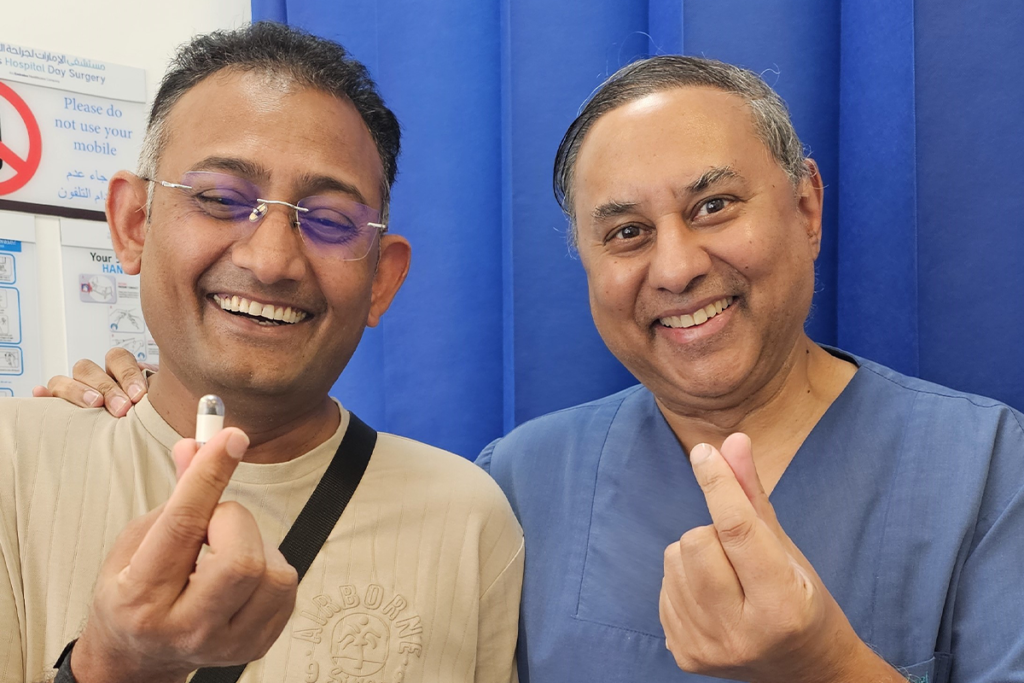
Capsule endoscopy is a non-invasive test that allows doctors to examine the small intestine, an area that cannot be fully seen with a gastroscopy or a colonoscopy. It involves swallowing a small capsule containing a tiny camera, which travels naturally through the digestive tract while taking thousands of images. These images are transmitted to a recorder worn on a belt and later reviewed by the doctor. Capsule endoscopy is particularly useful for investigating unexplained bleeding, iron-deficiency anaemia, suspected Crohn’s disease, or small-bowel disorders when standard gastroscopy and colonoscopy have not identified the cause.

When is capsule endoscopy recommended?

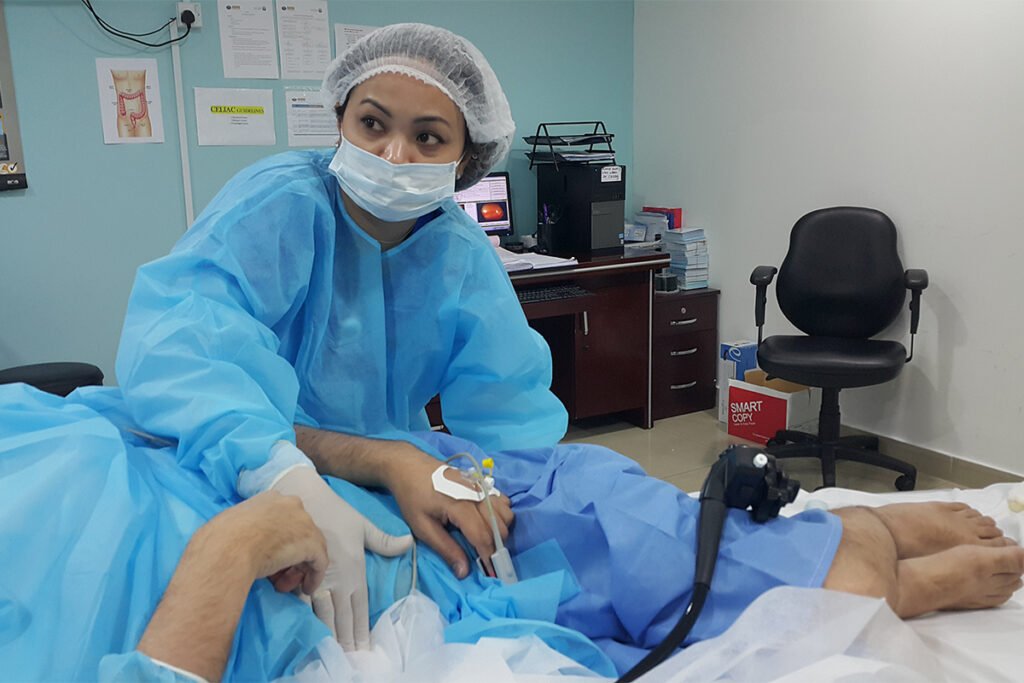
Capsule endoscopy is recommended when there is a need to examine the small intestine, particularly when standard tests such as gastroscopy and colonoscopy have not identified the cause of symptoms. It is commonly used to investigate unexplained gastrointestinal bleeding, iron-deficiency anaemia, or suspected Crohn’s disease affecting the small bowel. It may also be advised for ongoing abdominal symptoms, abnormal imaging findings, or suspected small-bowel tumours or inflammation when other investigations are normal. Capsule endoscopy is especially valuable because it visualises areas of the bowel that cannot be reached by gastroscopy or colonoscopy.

Why choose Dr Nigel Beejay for capsule endoscopy in Dubai?

Dr Nigel Beejay is internationally recognised as a world expert in capsule endoscopy. He has been a core faculty member on the Lumley Castle Capsule Endoscopy Course for over 20 years, helping train specialists from around the world. He was involved in the first public demonstration of capsule endoscopy in Canada in 2001, at the very start of the technology’s clinical adoption, and has published influential research in the field. Patients in Dubai benefit from this depth of experience, cutting-edge interpretation, and global expertise in small-bowel diagnostics.

Preparation for capsule endoscopy

To ensure clear images of the small intestine, some preparation is required. You will usually be asked not to eat for at least 8–12 hours before swallowing the capsule. In some cases, a bowel preparation or laxative may be prescribed the day before to improve visibility. Certain medications may need to be adjusted temporarily, and you will be given specific instructions if this applies to you. Following the preparation guidance carefully helps maximise the accuracy and diagnostic value of the capsule endoscopy.

What happens during the procedure?

○ During a capsule endoscopy, you swallow a small capsule containing a miniature camera, about the size of a large vitamin tablet. The capsule travels naturally through your digestive tract, taking thousands of images as it moves through the small intestine. These images are transmitted wirelessly to a recording device worn on a belt or harness. You will have to drink clear liquids for the first 4 to 5 hours during the procedure, but after that you will be able to eat. You can go about most of your normal daily activities during the test. After several hours, the recording is complete and the equipment is returned. The capsule is disposable and passes naturally in your stool, usually within 24–48 hours, without you noticing.

After the Capsule Endoscopy

After swallowing the capsule, you can usually resume normal daily activities immediately, unless advised otherwise. You will be told when it is safe to start eating and drinking, typically a few hours after the procedure. The capsule is single-use and passes naturally in your stool, usually within 24–48 hours, without causing discomfort. You do not need to retrieve it. Once the recording device is returned, the images are reviewed in detail, and your doctor will discuss the results with you at a follow-up appointment.

Frequently asked questions

Is capsule endoscopy painful?

No. You simply swallow a small capsule, similar in size to a vitamin tablet. There is no discomfort.

Do I need sedation?

No sedation is required. You remain fully awake and can continue most normal activities during the test.
How long does the test take?

The capsule records images for 6–10 hours as it passes through the digestive tract.

Will I feel the capsule inside me?

Most people do not feel the capsule at all once it has been swallowed.
What happens to the capsule afterwards?

The capsule is disposable and passes naturally in your stool, usually within 24–48 hours. You do not need to retrieve it.
Is capsule endoscopy safe?

Yes. It is very safe. In rare cases, the capsule may become temporarily stuck, usually in people with known bowel narrowing. This risk is assessed beforehand.

When will I get my results?

Once the recording device is returned, the images are carefully reviewed. Your doctor will discuss the results with you at a follow-up appointment.

Scroll to Top